

Claude Messages Count Tokens API Application and Usage
The Claude Messages Count Tokens API can calculate the number of input Tokens in a Message without actually creating a message, including Token counting for content such as tools, images, and documents. This is very useful when you need to estimate costs or check whether the input exceeds the model context limit.
This document mainly introduces the usage process of the Claude Messages Count Tokens API.
¶ Application Process
To use the Claude Messages Count Tokens API, first go to the 胖狐中转 Console to obtain your API Token and keep it for later use.
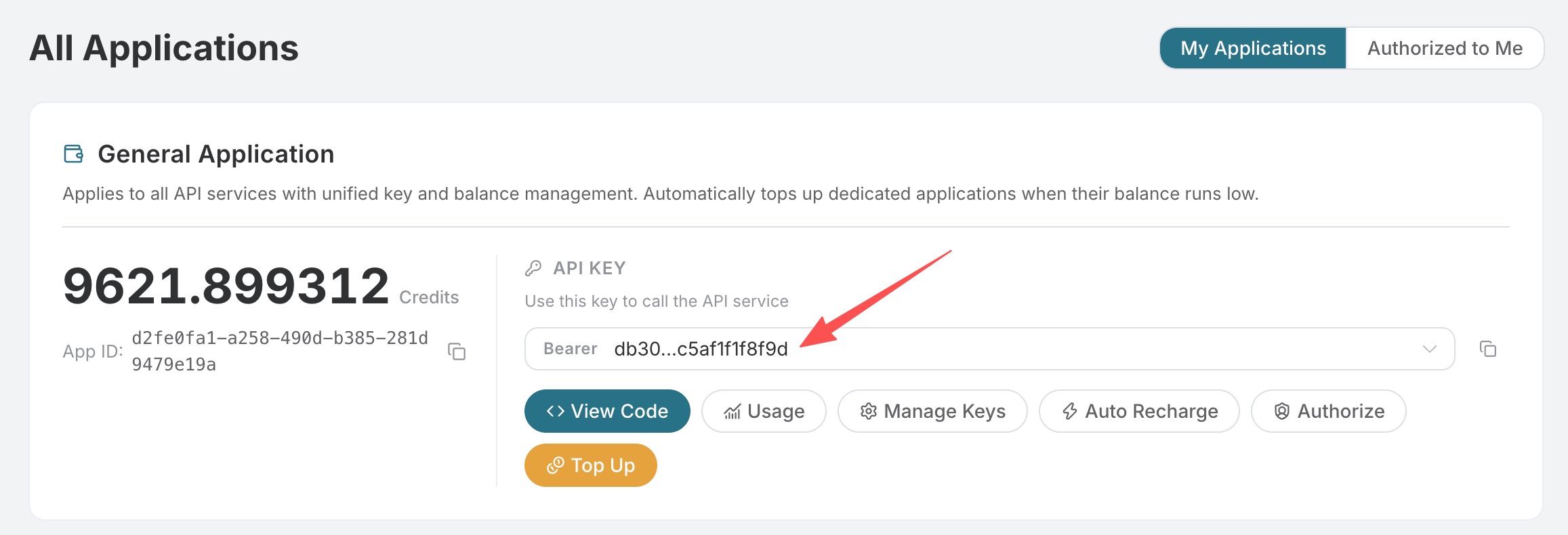
If you have not yet logged in or registered, you will be automatically redirected to the login page and invited to register and log in. After completion, you will automatically return to the current page.
One API Token can call all platform services; there is no need to apply separately for each service. Your first application includes free credits for a free trial; when credits are insufficient, you can recharge your general balance in the Console.
📘 Full documentation: Claude Messages Count Tokens API →
¶ Basic Usage
The request path for the Claude Messages Count Tokens API is /v1/messages/count_tokens, consistent with the official Anthropic API. We need to provide at least two required parameters:
model: Select the Claude model to use;claude-opus-5-5can be used for Messages Token Count, such as the latest flagshipclaude-fable-5-1; the originalclaude-fable-5remains compatible and retained.claude-sonnet-5-5has joined the native Messages series interface, supporting image input and adaptive thinking; its official reference prices for input, output, and cache reads are 2, 10, and 0.20 USD per million Tokens, respectively.messages: An array of input messages, where each message containsrole(role) andcontent(content).
Common optional parameters:
system: System prompt, which is included in the Token count.tools: Tool definitions, which are included in the Token count.thinking: Extended thinking configuration.tool_choice: Tool selection configuration.cache_control: Top-level or content block-level cache control configuration.
messages, system, tool call replays, URL images, and document/PDF content blocks use the same stable request structure as the Messages API.
¶ cURL Example
curl -X POST 'https://api.ace.324567.xyz/v1/messages/count_tokens' \
  -H 'accept: application/json' \
  -H 'authorization: Bearer {token}' \
  -H 'content-type: application/json' \
  -d '{
    "model": "claude-fable-5-1",
    "messages": [
      {
        "role": "user",
        "content": "Hello, Claude"
      }
    ]
  }'
¶ Python Example
import httpx

url = "https://api.ace.324567.xyz/v1/messages/count_tokens"
headers = {
    "accept": "application/json",
    "authorization": "Bearer {token}",
    "content-type": "application/json",
}
payload = {
    "model": "claude-fable-5-1",
    "messages": [
        {
            "role": "user",
            "content": "Hello, Claude"
        }
    ],
}
response = httpx.post(url, headers=headers, json=payload)
print(response.json())
Example return result:
{
  "input_tokens": 11
}
¶ Using the Anthropic SDK
The Claude Messages Count Tokens API accepts the stable request structure of the Anthropic SDK and can be called through the anthropic library. The interface uses the native Count Tokens capability corresponding to the selected model to calculate input, and can be used to check the input size before sending a Messages request.
from anthropic import Anthropic

client = Anthropic(
    api_key="{token}",
    base_url="https://api.ace.324567.xyz",
)

result = client.messages.count_tokens(
    model="claude-opus-4-8",
    messages=[
        {
            "role": "user",
            "content": "Hello, Claude"
        }
    ],
)
print(result.input_tokens)
¶ Token Counting Including Tools
If your request includes tool definitions, these tools will also be included in the Token count:
result = client.messages.count_tokens(
    model="claude-opus-4-8",
    messages=[
        {
            "role": "user",
            "content": "What is the weather in San Francisco?"
        }
    ],
    tools=[
        {
            "name": "get_weather",
            "description": "Get the current weather in a given location",
            "input_schema": {
                "type": "object",
                "properties": {
                    "location": {
                        "type": "string",
                        "description": "The city and state, e.g. San Francisco, CA"
                    }
                },
                "required": ["location"]
            }
        }
    ],
)
print(result.input_tokens)
¶ Token Counting Including System Prompts
System prompts are also included in the Token count:
result = client.messages.count_tokens(
    model="claude-opus-4-8",
    system="You are a helpful assistant that speaks Chinese.",
    messages=[
        {
            "role": "user",
            "content": "Hello"
        }
    ],
)
print(result.input_tokens)
¶ Notes
- This API only calculates the number of input Tokens and does not generate any model output.
- Token counting results can be used to estimate input size and check the context window; final billing is based on
usagein the actual Messages response. - Images, PDFs, tool definitions, system prompts, and thinking configurations are included in the result according to the input rules of the selected model.
- This API is completely free and does not consume any credits.